
Stauffacher and Gertrude
William TellThis flow follows the partnership through which private counsel becomes a commitment to public resistance.
increasing Bearing strength in each event
 decreasing
Bearing strength in each eventdecreasingA Husband’s Silence

A Husband’s Silence
A visible change
Gertrude notices that Werner Stauffacher has become unusually sorrowful despite the household’s prosperity. She treats his silence as a shared marital burden rather than a matter he must carry alone.
Trust as counsel
She reminds him that she is his faithful wife and asks to know what troubles him. Her affection gives him a space in which political fear can be spoken openly.
Their relationship makes the first political turn possible. Stauffacher’s public resolve begins in a private conversation marked by attention and trust.
The House Under Threat
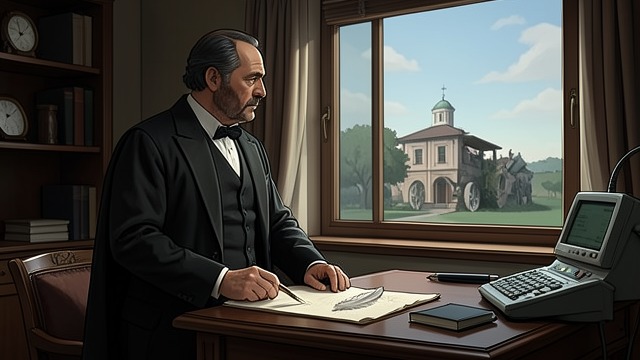
The House Under Threat
Prosperity made precarious
Stauffacher explains how Gessler threatened to restrict the freedom with which he built his house. The family’s home, once a sign of stability, becomes evidence of the governor’s growing reach.
Gertrude reads the danger
She identifies Gessler’s envy and political purpose, then urges her husband to consult other leaders. Her analysis links a domestic threat to the broader vulnerability of the cantons.
Gertrude’s insight changes how Stauffacher understands the insult. It is not an isolated personal grievance but a warning of what may happen to every household that remains politically divided.
Counsel for Resistance

Counsel for Resistance
A dangerous alternative
Gertrude argues that people across the cantons are suffering similar abuses and that trusted leaders should quietly consider how to end them. She speaks from knowledge gathered through years of listening to political discussion in her father’s home.
Courage grounded in love
Stauffacher fears that war could destroy their house and expose Gertrude to danger. She answers that she would rather give up the house than keep a life of injustice.
Her counsel is not detached from personal feeling; it grows from an understanding of what their family might lose. Stauffacher leaves for Uri strengthened by a partnership willing to place shared rights above property.
A Home Left in Her Care

A Home Left in Her Care
Separation for a cause
Stauffacher tells Gertrude that he will meet Walter Furst and consult other leaders. He entrusts household affairs to her and asks her to continue welcoming travelers and religious visitors.
Domestic duty and political duty
The exchange keeps their shared life present even as Stauffacher enters secret political work. His absence does not make Gertrude a passive figure: she has already shaped the decision that sends him away.
The home becomes both a refuge and a political stake. Its hospitality reflects the social bonds the governors’ coercion threatens to disrupt.
A Marriage Behind the League

A Marriage Behind the League
Private resolve in public consequence
The play does not return to Gertrude for a later reunion scene, but her early counsel remains part of the Confederates’ formation. Stauffacher’s political commitment began with the trust and challenge she offered at home.
The household within the country
His house is one of the homes the uprising seeks to protect, but their conversation also shows that liberation requires judgment and risk-taking within families. Gertrude’s voice helps make his public role possible.
Their partnership frames resistance as a shared undertaking, not the solitary achievement of male leaders. The political story retains its domestic foundation even when the action moves to councils and battle plans.
Early in the story, at Steinen
Early in the story, as Stauffacher recounts Gessler’s visit
Early in the story, before Stauffacher travels to Uri
Soon after Stauffacher’s decision to travel
Near the ending, after liberation
